

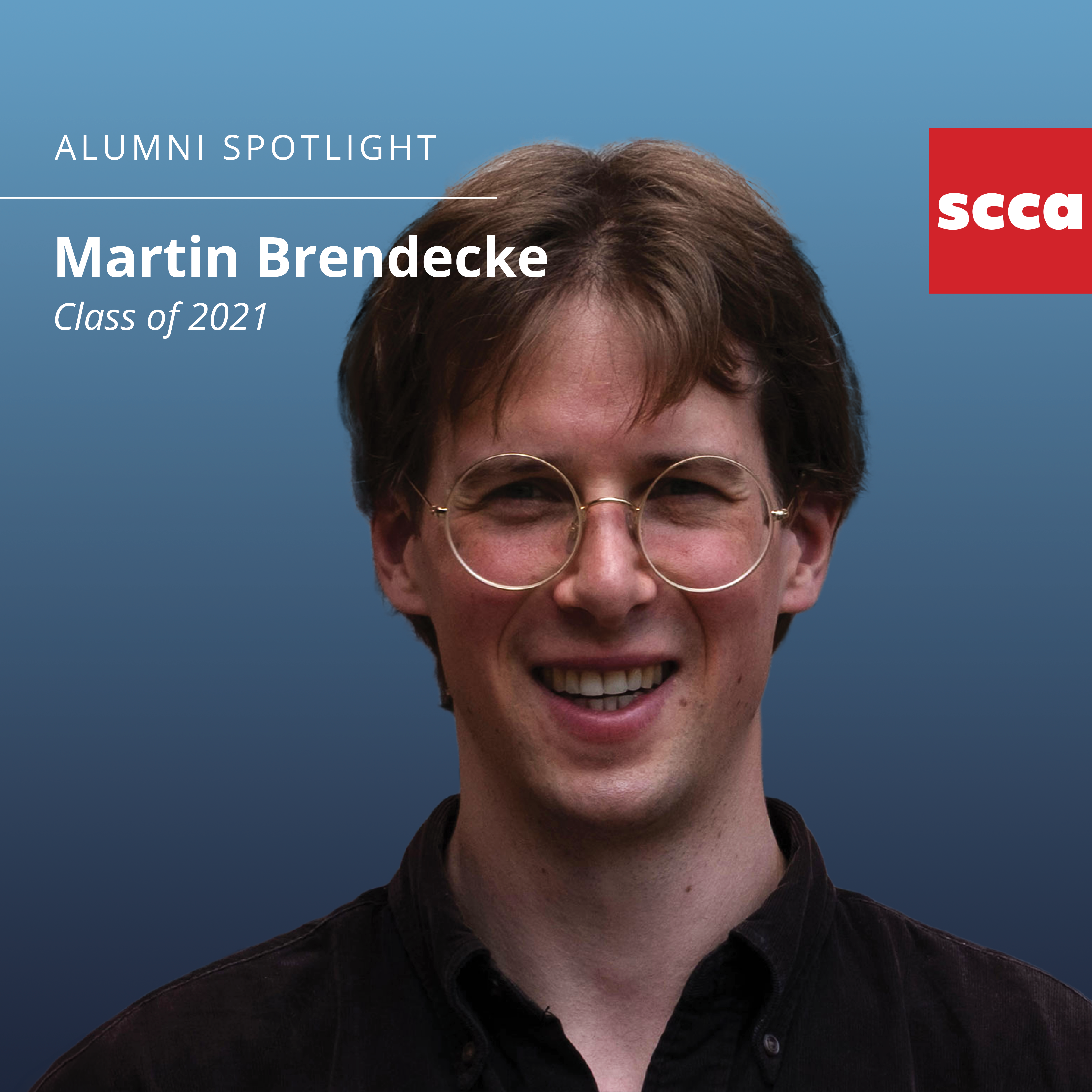
In your own words, can you introduce yourself and talk a little bit about what you do? I’m Martin, and I’m a type designer. Right now, I’m getting a master’s degree at a small art school in France doing type design. I got the chance to get a master’s degree because a DNSEP (MFA) in France costs €1,000. I’m really enjoying the school I’m at. I like my work, I like my teachers, I like my colleagues, I like living in France. So I decided to stay for another year. But I’ll be back in the U.S next year. After graduation, I’m going to be freelancing and looking for work as a type designer. I haven’t really worked as a graphic designer and I still don’t feel like a real graphic designer because I started off teaching myself graphic design. And then I went to Seattle Central and I got super burned out. Once I had recovered, I put all my energy into applying for a type design education. I already knew when I started at Seattle Central that I would want to design typefaces, and I even thought about getting a master’s degree when I applied for Seattle Central—but I always sort of doubted I would go for a master’s. It seemed extravagant.
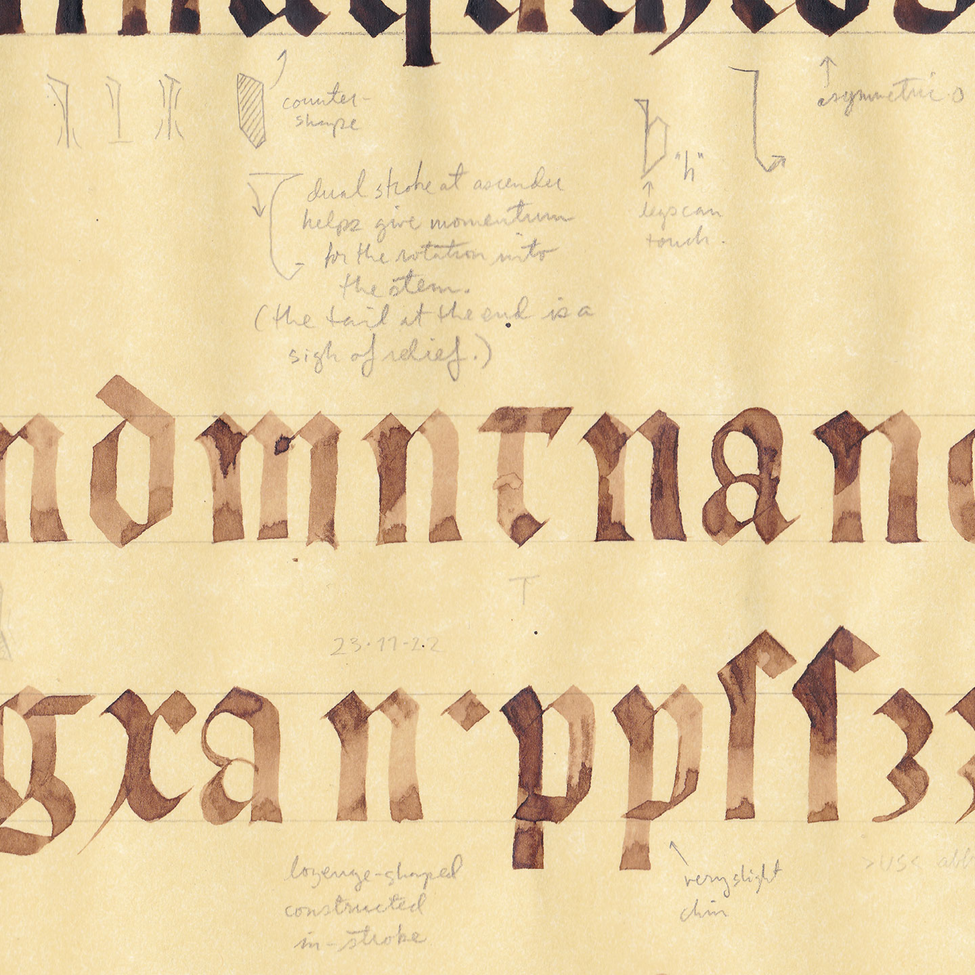
I loved typography class. I also love with flat design. I think it’s so cool that you can do so much with just two planes, with just black and white. There are infinite possibilities. A lot of my classmates at Seattle Central were really into illustration, 3D, and motion. Me? I don’t want color. I don’t want a third dimension. I don’t want time or motion. I just want a plane of existence. And that’s just gotten more and more interesting to me. Since I liked typography so much, as soon as I could, in Special Projects (2nd year), I used all three quarters to make a typeface. I started in fall and sought out resources everywhere. I found resources in Seattle, I took a class from Australia. I had meetings with people, including a guy from the Netherlands who would later be my teacher. I found a mentorship after I graduated with a teacher from Slovenia who I later met, which was really cool—I met her at ATypI in Paris a couple of years ago.
The difficulty was that Seattle is sort of a type design void. I think that’s going to change in a couple of years. But, especially because of COVID, the type design scene kind of disappeared. I know a few people designing typefaces in Seattle, but it’s not a really thriving scene. I’m hoping to revitalize the type design scene in Seattle when I get back. I feel like kind of an impostor as a graphic designer because I still haven’t been doing it for 10 years. Remember, I went straight from graphic design school into applying for a type design education and then spent the last three years getting really good at type design in France.

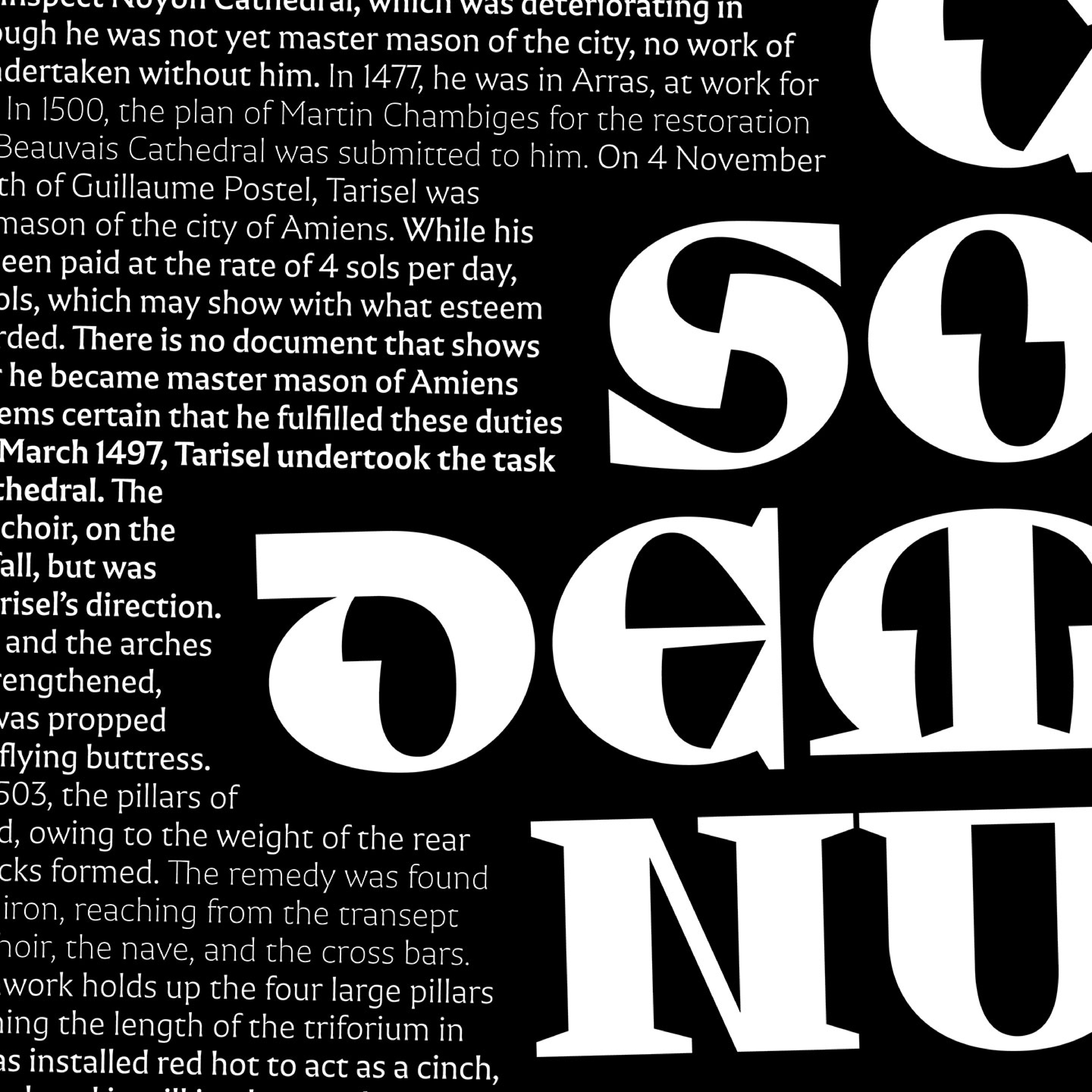
In my type design practice, I’m focusing exclusively on making digital typefaces based on medieval lettering. I applied to EsadType with a project proposal saying: I want to research the legibility, patterning, and structure of the alphabet and understand what makes a text typeface tick—a very process- and user-oriented approach. What happened was, I tried to explain that to my advisors for a month or two, and people didn’t understand what I was talking about. Eventually, I realized I didn’t understand what I was talking about. And then I was like, you know what? Scrap it. I want to make Gothic fonts. And everyone goes—oh yeah! Then I started having fun. I realized that I learned a lot at Seattle Central, but there was also a lot of my training that I had to undo. I’m going to see how it evens out in five years or so, once I really get going. In France, the design education is much less practical. At least at the ésad d’Amiens, the graphic design education is much more freeform, much more experimental. By and large, the students are way less prepared to get a job—most of them—but the kind of experimentation that I see people doing is really cool and you just don’t have time to do that at Seattle Central. I used to think: this needs to be practical and this needs to sell and this needs to solve problems. But what about expression and what about just being you? One of the things I most admire in a graphic designer is when someone can’t help but be themselves. They get a brief and whatever the brief is, they just do their thing. When you can say, oh, hey—that’s Scott or hey—that’s Hélène or whoever, that’s admirable.
So what originally inspired you to join the program, specifically SCCA? And then what did you hope to gain from your education? I worked at the Central Co-op before and during my time at SCCA. There was a guy named Mitchell Bell who I worked with and he was always drawing cartoons. And I knew he was attending graphic design school and he was really busy all the time.
A few years went by. I went to Brazil for a few months and then I realized that I needed to get a real job. I started teaching myself how to use Illustrator and learning how to use typographic grid systems and practicing calligraphy. Then I applied to Seattle Central, moved back, got accepted, and started working at the Co-op again. If it weren’t for the Co-op, I wouldn’t have found out about Seattle Central. There was some point when there were about seven people at the Co-op who had studied at Seattle Central or were studying at Seattle Central. It was this strange hotbed of people from both places. But that’s what got me started—it was word-of-mouth.
When you were coming to the program, what things did you want to get from it? I wanted to get a job where I wouldn’t have to stand on concrete all day. I wanted to earn more money in less time. I wanted to use my aptitude for communication and language and composition. And then I became more and more interested in letterforms. And so I was like, okay, I’m going to use my aptitudes and interest in letterforms to earn more money in less time. That’s what I wanted to get out of it. And I got it!
How did your education here influence the way that you work today, in terms of process, like collaboration, creative thinking? My time at SCCA influenced me in terms of process because you learn a really rigorous and logical process at SCCA. So that was a huge influence: to learn a strict methodology for approaching a brief and learn some practical skills about design.
Collaboration is a weird topic for me with graphic design because most of the time that I was studying at Seattle Central was during COVID. I started in 2019. I had one and a half quarters on campus and then things got shut down. So I spent a lot of time working alone and I loved it. I loved just getting into my own zone and not having distractions. But I did make some really good friends and people who I loved working with. So, in a roundabout way, the isolation of studying from home taught me how much that I love working around people—whether or not they’re directly involved in the project that I’m doing. And that’s a big part of why I came to EsadType: because I didn’t want to take another online class. I wanted to have people around.
Did you experience creative burnout during your time at Seattle Central? And were there any outlets that you had so that you could allow yourself to think more creatively and bring that back into your projects or schoolwork? Yeah, totally. I got super burned out in the 2nd year because I was studying alone and overworking, designing a typeface and working part-time and all that jazz. In winter quarter of 1st year, I got creatively burned out and I needed some time to recover at that point. But, generally, exercise, music, and learning new things on the side. For me, that’s an important way to keep myself interested in graphic design because I’d rather be playing music—graphic design is something that I enjoy doing for money. But I get a lot of inspiration from music and that helps me to ‘think sideways,’ as Billy Connolly used to say. So, anything I can do to get me to reframe a project is very helpful. If you can do that, then you can think around the problem and find a solution because you’re looking at it from a different perspective. I found when I was studying at SCCA that I needed to go for long walks and listen to music and look at trees and birds and clouds and buildings and things. And then I would find the answers that I wasn’t finding sitting and looking at the screen. And doing things with my hands and playing music, that always helps me to find a way around a creative block.
The more stressed out I got, the longer walks I would go on. The closer to the deadline, my walks would get longer and, somehow, I still stayed on top of it. And I think that was when I was the most productive. When I recognize that I’m not in a great frame of mind for doing creative stuff, I go look at some leaves and it all sorts itself out.
Looking back, are there any specific projects, experiences, especially if it’s tied to an instructor, that left a lasting impact on you? All I can think of right now is the weird stuff that Jason says. When he described a packaging project, he said: “This is going to be like giving birth to a three-headed alien sideways.” I think that phrase stuck with me more than the project itself!
Jason taught me a lot about teaching—and learning. I will always remember the first day he introduced us to InDesign and he showed a video of some people installing concrete curbs in a parking lot. He used that as a metaphor for the tab ruler in InDesign. And it was one of the most stellar educational moments I’ve ever witnessed. He opened it and we’re like—what the fuck is he doing? Why are we watching this advertisement for those concrete things that rip the bumper off your car at Costco? And then he paused the video halfway through—it was a series of speed bumps and people installing these speed bumps in a parking lot—and explained: “Okay, you see these speed bumps? That’s like when you have your paragraph and you go tab—tab—tab—tab—tab: speed bump—speed bump—speed bump—speed bump.” It was genius. I’ll always remember to use the tab ruler. But that was just like one lesson, but it was like that every class!
Having freedom made the biggest impression on me. That’s how I made my first typeface. It was winter quarter of 2nd year when I finished my assigned website project. I finished it early and in my free time I made an Iron Maiden mini site with a fully responsive typographic layout for each track on the Powerslave album—I loved having the freedom to mess around with whatever I was interested in and that encouraged me to keep doing the things I like.
How did that kind of broader community from school, if they did play any role in your growth as a creative, as a professional, any or all? That’s an interesting question. I made some really good friends in my class. Some folks I still stay in touch with! But there were also some dynamics in my class that I struggled with. It was nice to just be on my own after a while and make what I wanted to out of things and focus on what I wanted to focus on, which was mostly doing the work. That shaped why I’m a freelancer now. I like having autonomy and I want to put myself in a work environment that suits me. I like to work on my own terms.
But the quality of connections with the people who did stick around, I know we’re going to be friends for life. That’s really special. I think that experience encouraged me to seek out the kind of people I really like to be around, really like to work with. And also to give myself space when I need it, because sometimes it helps me focus.
Some of my favorite jobs I’ve gotten from the alumni network and I wouldn’t have found the Seattle Central graphic design program if it hadn’t been for the alumni and the people who I worked with who had gone through the program. The greater network is a powerful resource!
Alumni Profile
I’m Martin, and I’m a type designer. Right now, I’m getting a master’s degree at a small art school in France doing type design. I’m really enjoying the school I’m at. I like my work, I like my teachers, I like my colleagues, I like living in France. So I decided to stay for another year. But I’ll be back in the U.S next year.
Alumni Profile
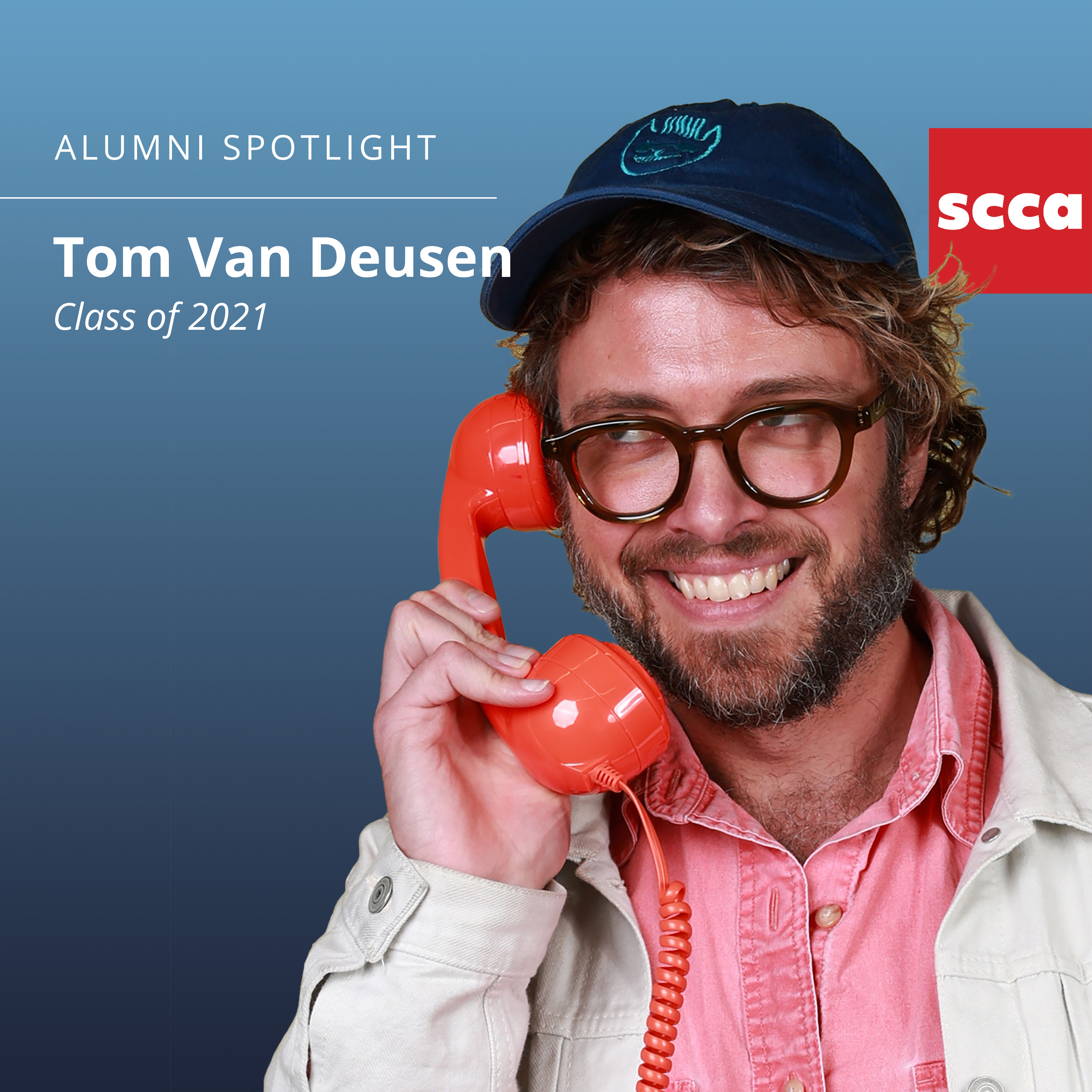
I wrote a lot of comic books. I was very involved with the Seattle comic scene. And I think that also was something, and I know a lot of cartoonists that went through the program and that really parlayed well with learning even UX like storyboarding and that type of thing, but also it's really useful to be able to visually display something. And so using those skills, using something I knew how to do.
Alumni Profile
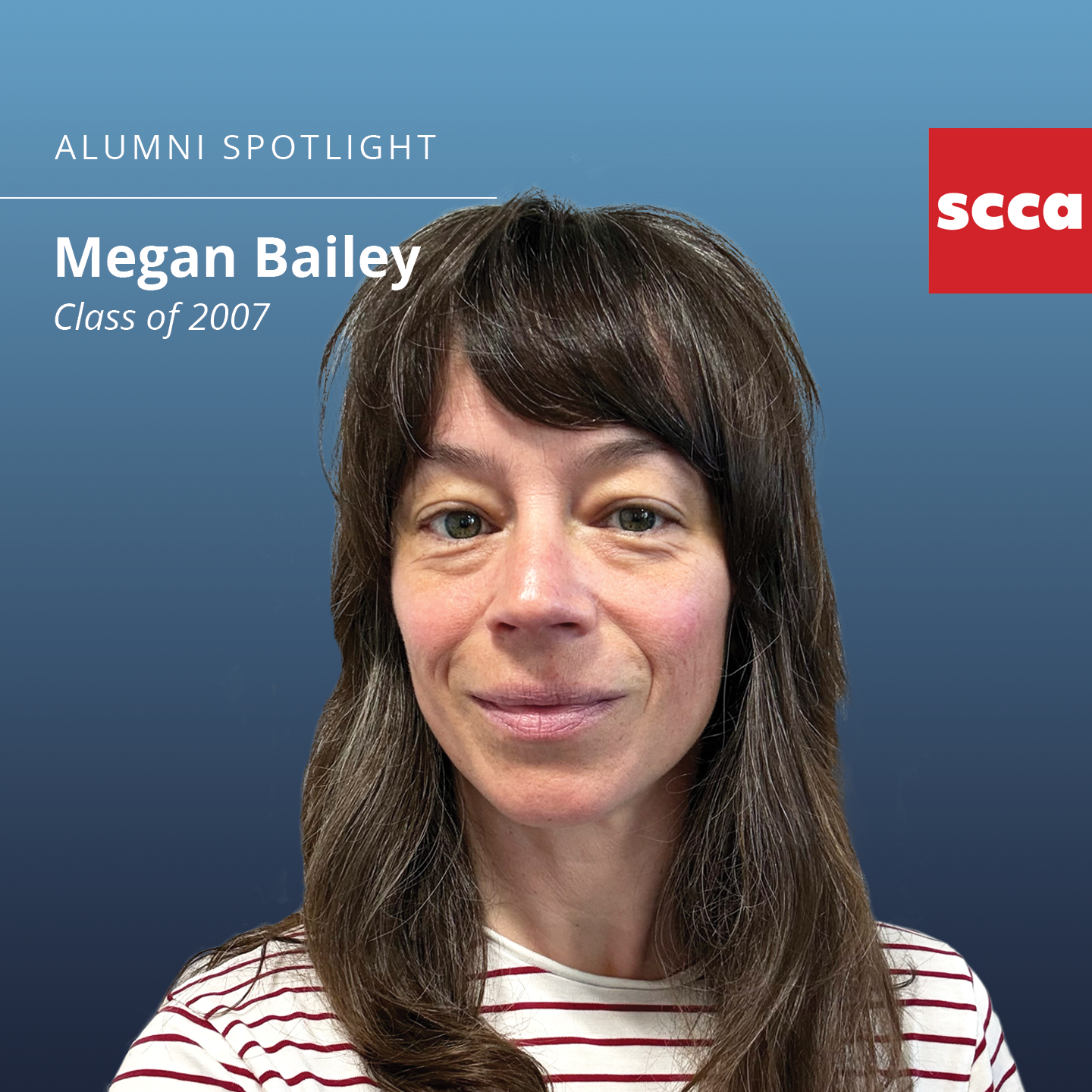
Megan is a 2007 Creative Academy graduate who runs her own graphic design business with her sister in Bellingham, Washington