

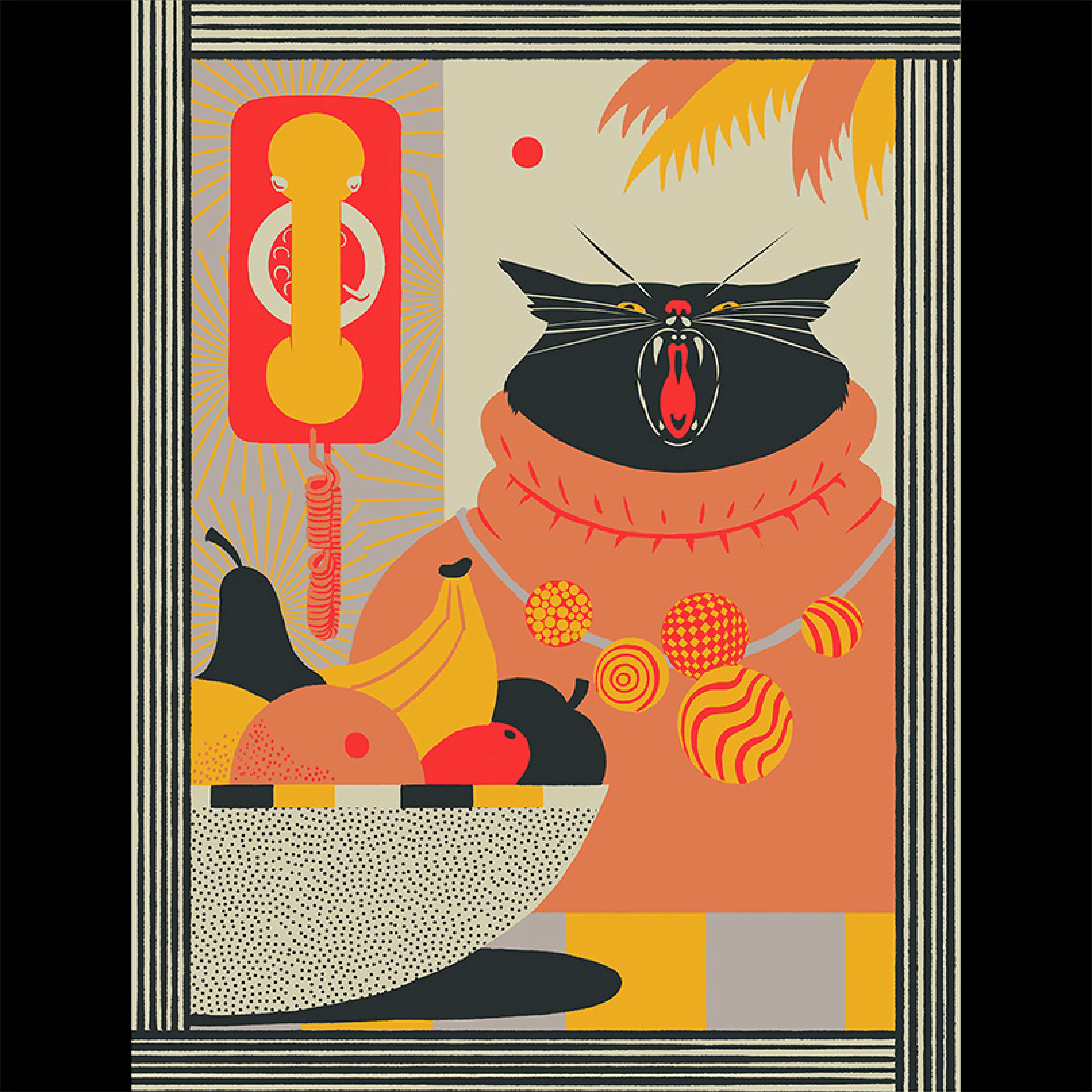
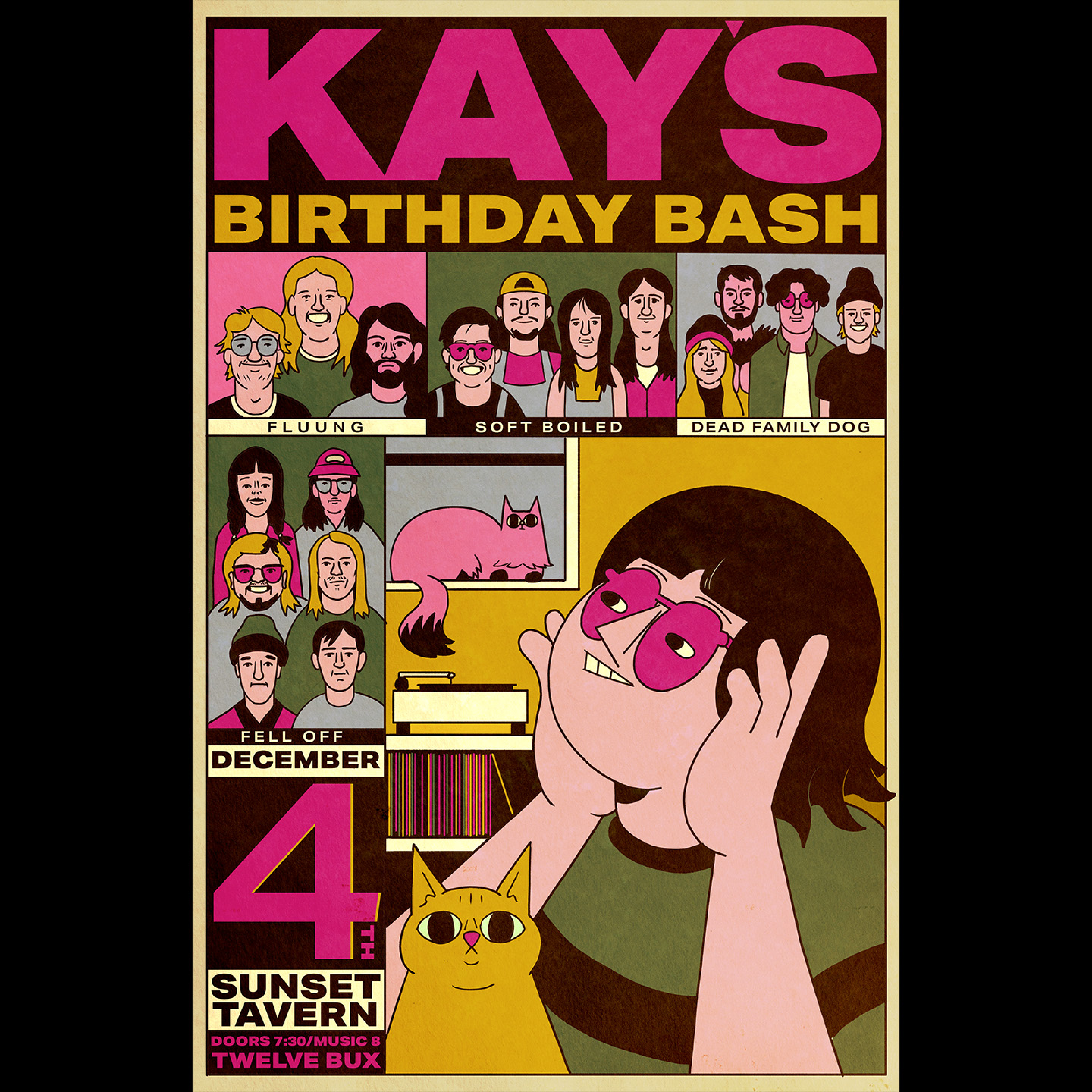
How would you describe yourself and like the work that you currently do right now? Just to kind of get an introduction to yourself as a creative person. Right now I'm working as a freelance motion designer, mostly doing advertisements and graphics for out-of-home (billboards, usually). I do a lot of design and animation for social media, YouTube shows, and various other things. I’ve worked on stuff for Spotify, Pandora, SiriusXM, More Perfect Union and all sorts of other things. Previously I worked at SiriusXM and Hogarth. I also do illustrations, screen printing, and comics in my free time.
Did you originally want to get into motion graphics when you started the program, or was that something you found out through the program, or was that something you figured out once you left the program? I think the really cool thing about the program is that it's very open-ended. When I was applying, I had been working other jobs. I have a bachelor's in fine art from 2008. Going back to school as an adult, I wanted to do something very pragmatic, like being a UX designer. I'm living in this tech hub of Seattle, and I didn't know exactly what a UX designer does - but that's what I'll do, that's where the money is. I'll finish, get a good job and live a fulfilling middle-class life. But when I was in school, I immediately gravitated toward visual stuff. UX was interesting, but it was not what really compelled me. Once a week, we had a unit on new media, and had one little unit on animating in After Effects. That was just so neat to me, so I took a few online classes to learn it better for special topics. I incorporated motion design into some of the projects I produced for the different classes because the instructors encouraged it, especially in second year. When I finished school, I had 40 seconds of animation. It doesn't sound like a lot, but it was enough for me to put a little reel together and get a job when I finished school.
That's awesome. When did you graduate? 2021, right in the middle of Covid. It turned out that learning to work remotely in school helped me out early in my career!
What originally inspired you to join the program? Like what did you hope to get from your education? I wrote a lot of comic books between undergrad and going back to school. I was very involved with the Seattle comic scene, and I know some cartoonists that went through the program and that really parlayed well with learning graphic design. It was nice that I could utilize something that I had done moonlighting for the previous 11 years into a solid career.
With the education that you got at SCCA, how has it influenced your current work today in terms of your process, your collaboration, or your creative process? Working in teams, especially when I first started at SiriusXM, I felt at home because it was a lot like what we did for projects at SCCA. I was working on a small team, and knew what I was supposed to do. I had a clear expectation to deliver and be prepared. That was another thing, I learned how to pitch, even interdepartmentally, to stakeholders. Especially like Eric's classes, you had to present, and to be prepared. Screwing that up a few times in the safety of a classroom setting made it so that I knew what not to do.
Were there any projects or like experiences during school that had a lasting impact? Definitely - Magazine. That one was really, really cool, I’m really proud of mine! It was a bit of a drag because we were the first COVID class, and we didn't get to print ours. It was such a huge project, and it was wonderful to work on something for an entire quarter. Almost everyone that was in the program had their magazine in their portfolio, because it's a culmination of everything you learn in that first year. Micro/macro typography, layouts, hierarchy, everything. And when I did mine, I also incorporated it a little bit into one of Eric’s projects where I made an AR cover for it so that when you pointed a phone at it, it would animate the cover.
For special topics or independent learning, do you have any advice on how to go about it? I figured out second year that I found motion design was really fun to me. My one tip is that if you find something fun, pursue it! If you are at all interested in working in media, having audio skills, video skills, any of this stuff is useful. It's great to have on your resume. I don't regret anything I did in those modules or in those independent studies. I feel like I utilized it about as well as I could, and I got a ton out of it.
What is your day-to-day role or just your day-to-day work life look like? I work on various contracts, sometimes overlapping, animating and designing stuff for clients. At SiriusXM / Pandora I did something like 50 billboards for Times Square, which is a feather in my cap, but boy howdy did I get sick of doing those. I also design and animate for documentaries, I really enjoy doing that. I also do graphic design, some audio stuff, basically whatever the client needs on top of motion. It really runs the gamut, and there’s a lot of work out there if you look and network.
Are there any specific professional projects or anything that you've been working on that you’re proud of? The More Perfect Union documentaries were really fun, and I made a motion design package for a podcast called Lightwork. I got to work with a super-cool creative director on that one, and it came out great.
As a person who graduated in 2021 and started your career, is there any specific advice to your past self or just like newer designers or people who are getting out of school or currently in school like hey i wish i would have done this or do this kind of like word of advice Apply to a ton of stuff, never say no if you can (except if you’re getting exploited! Please don’t do that!) You’re going to fail, you’re going to have interviews you don’t get, and so many unanswered job applications. When you get a rejection, immediately delete it and act like it never happened. Personally, I took a job that I didn’t feel qualified for at first, but I worked very hard to learn as quickly as possible. You have to start somewhere. Imposter’s syndrome is something I deal with to this day, but you've got to power through!
Alumni Profile
I’m Martin, and I’m a type designer. Right now, I’m getting a master’s degree at a small art school in France doing type design. I’m really enjoying the school I’m at. I like my work, I like my teachers, I like my colleagues, I like living in France. So I decided to stay for another year. But I’ll be back in the U.S next year.
Alumni Profile
I wrote a lot of comic books. I was very involved with the Seattle comic scene. And I think that also was something, and I know a lot of cartoonists that went through the program and that really parlayed well with learning even UX like storyboarding and that type of thing, but also it's really useful to be able to visually display something. And so using those skills, using something I knew how to do.
Alumni Profile
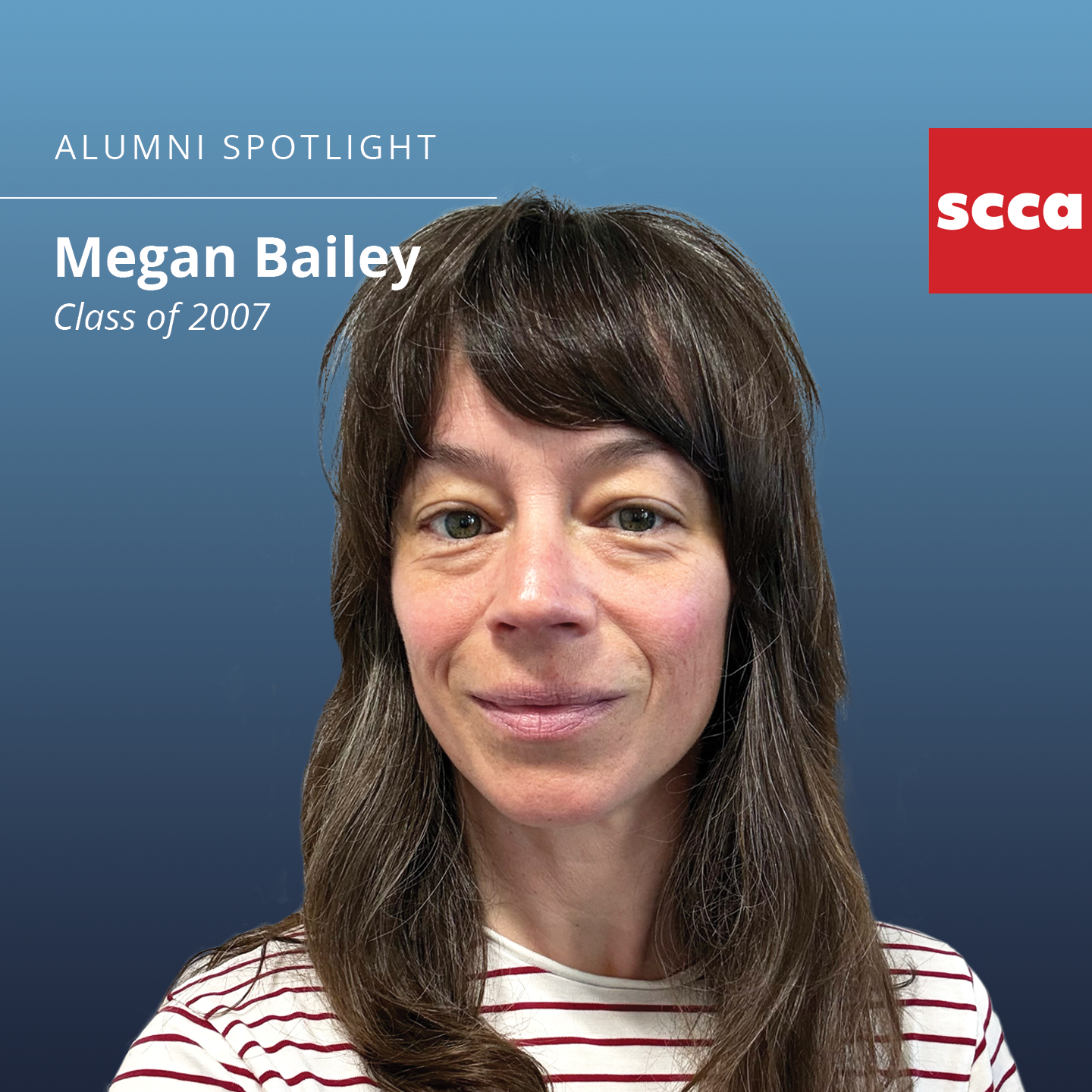
Megan is a 2007 Creative Academy graduate who runs her own graphic design business with her sister in Bellingham, Washington