

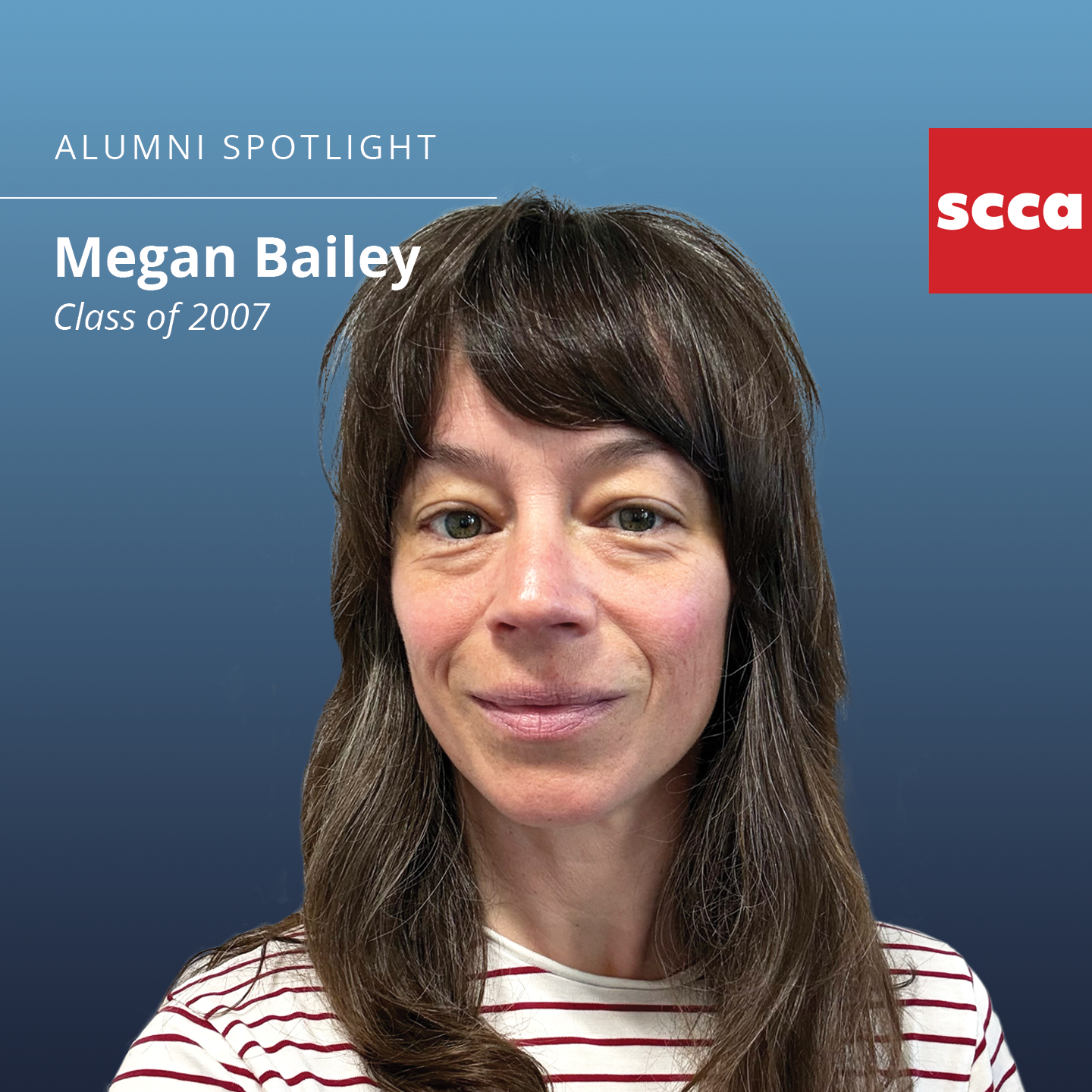
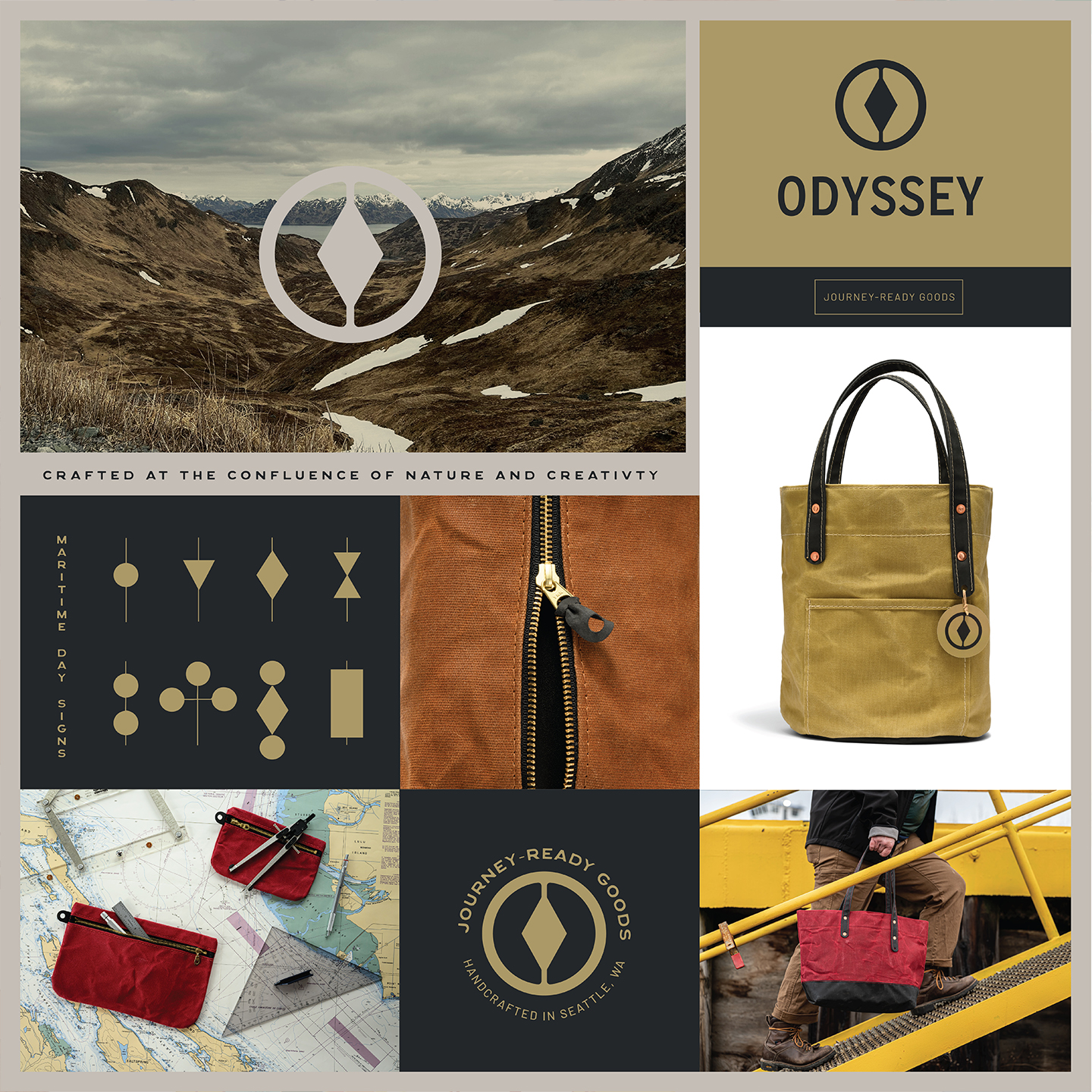
How do you describe yourself and the work that you do? I am on my own business. My sister and I started our own creative agency in 2020. So, in the middle of Covid. We’re a branding and design agency. We’re really small, but we have a big team that we work with kind of on a case by case basis, and we primarily serve craft food and beverage and the outdoor industries. Hospitality. And that’s just because those are the people that we tend to know. We’ve been word of mouth thus far. Those are just the businesses that kind of come our way. And it’s also what we love to do. We do a lot of brand development, rebrands, logo design, lots of packaging. It’s super fun. I love what I do.
Is that Snack Plate Creative? Yeah, yeah. We grew up on snack plates, and still to this day we eat a lot of them as meals. So it seemed like a good kind of name for a creative agency.
Did you know that you would primarily be doing food and beverage when you came up with the name? Or was it just coincidence? We kind of had an idea, I think originally, I didn’t really want to be pigeonholed into that. But since then we’ve had requests for proposals come outside of those industries and we’re kind of realizing it’s our sweet spot. I’ve worked in craft beverages for a while before starting Snack Plate, so I had some experience there. My sister lives in Yakima and I live in Bellingham, so she’s in hop country and wine country. And then Bellingham has like 500 breweries here. So it’s just a good place for us to be.
What brought you here to SCCA? How did you end up here? Well, it’s funny. My best friend and roommate went to the apparel design program. We were both out of college - the first round of college, four year degree. And she got a job with Nordstrom at the portfolio show. And I thought, well, that is promising. And I wasn’t apparel-curious, I knew I wanted to do something creative, but I wasn’t really sure. I didn’t actually really know what graphic design was. I went to Seattle Central and looked at their two year vocational programs and saw graphic design, and I thought that that could be a good fit for me. I went to an informational meeting and I was hooked. So that’s really how I ended up there. And it was a really good choice. I’m pretty sure I started in 2005, and I graduated in 2007.
Were you able to find a job out of school or did it take some time? That was kind of rough. So straight out the gate I didn’t find a full time job for a little while. I did apply to a couple staffing agencies. I think it was Creative Circle and Smart Department at the time. They placed me with some really great companies. So that was actually really great because I got to put like REI on my resume and I worked for a couple post-production companies. That was kind of what I did at first. And before I went to design school at Seattle Central, I was working for a camping outdoor equipment manufacturing company in Seattle called Cascade Designs as a repair technician. So when I left that job in order to go to school, I was like, “hey, I’ll be back with a graphic design degree. I hope you hire me.” And so I went back to them and they eventually got me in. 2008 happened. They got rid of upper management, and I was able to get in as an entry level designer. And I stayed there for seven years. So I was basically like an in-house designer working on packaging for camping equipment.
You’re some time out from school, but how did your education at SCCA influence your current work in terms of your process, collaboration etc.? Makes me think way back - when I was at Seattle Central, we had a typography teacher named Margaret. She was like the type Nazi. We loved her. She just really drilled into us - her favorite quote was by Richard Bringhurst - “by all means, break the rules, but break them beautifully.” So she really drilled into our head design theory and typography treatment and all of that. And then once you have that mastered, then you can break the rules. And I feel like that’s the thing that stuck with me the most from Seattle Central - learn your craft well enough to push the boundaries in a creative and beautiful way.
From that time, are there any projects that stick with you or classes or instructors? Margaret was one. Tom had a packaging class and I think it was my favourite project. We designed a tea box, and I didn’t really know at the time that that’s what I wanted to do, but that’s what I do these days. So I think that that really stuck with me. I love packaging. I’m just such a sucker for it myself. I like to see how it reflects cultural trends. I like to get into the sort of the anthropology of why people select certain things based on color or messaging hierarchy and the general vibe. So I think that that was a pivotal project for me. Packaging is an area that’s not quite as affected by AI. It’s a pretty protected industry, it definitely requires a bit of human, cultural understanding. And it’s dimensional, it’s something you hold.
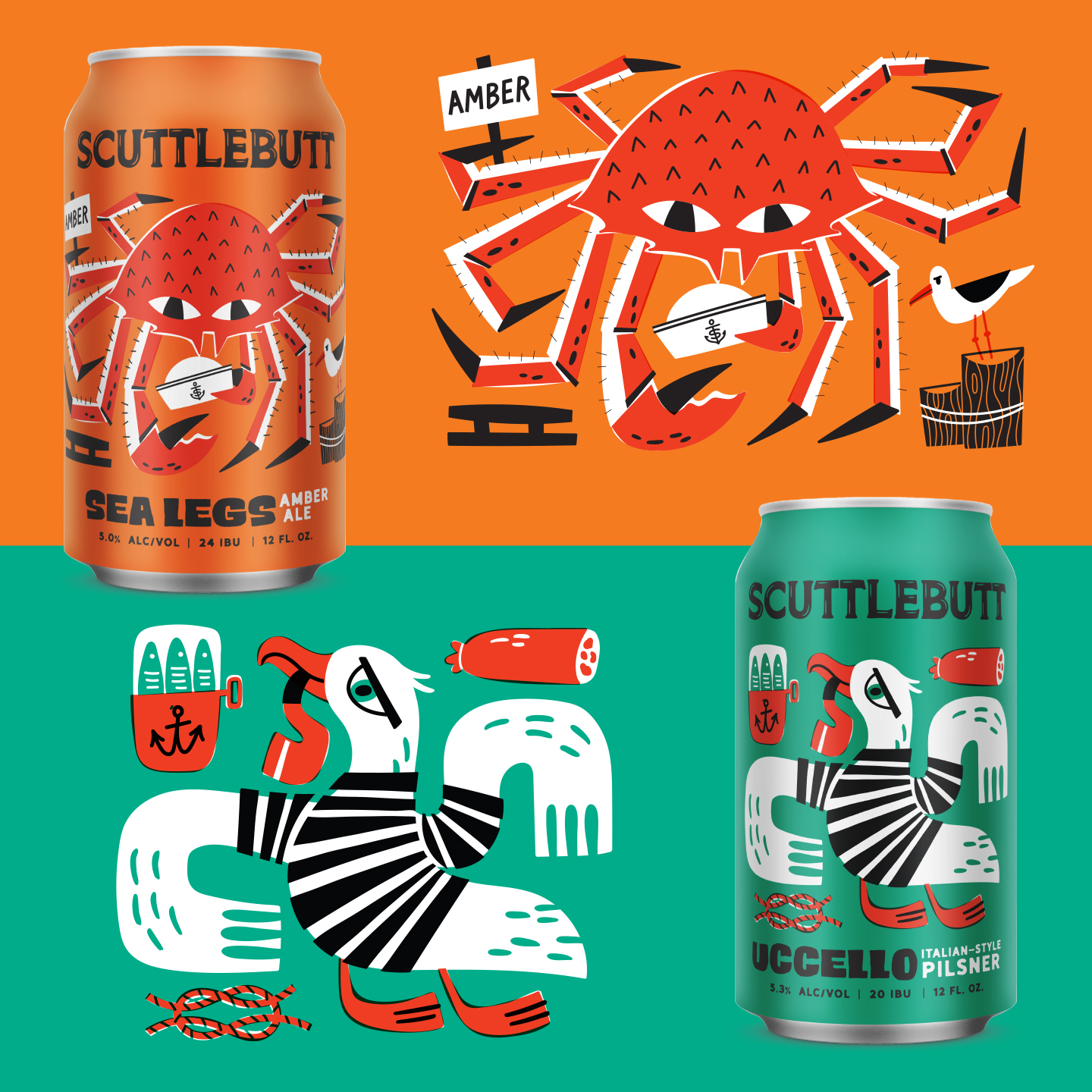
What’s the experience of seeing your designs go from a digital space to a 3D space like for you? It’s so fun. Last weekend I was out on San Juan Island with my family, and my dad ordered a beer, and they brought him a can that I had designed that I hadn’t seen yet. And I was like, “oh, there it is.” It’s still a little rush every time I see things come to life like that.
I’d like to ask what kind of role your cohort and broader school community play in your professional development? Are you still in touch with your classmates? I am lightly in touch with some of them, but I love them all. Like, if I were to see any of them now, I would just give them like the biggest hug - our class was really close. The years above and below us, we all knew each other. It was like a big family. Mark is like the uncle to everybody.
I live in Bellingham, there’s not really anybody up here. But my Seattle community is still very much centered around Seattle Central. And I keep in touch with Mark. I always email him if I’m looking for talent and just to see if he has any recommendations.
What is the design community in Bellingham like? Is there one? So it’s interesting because we started this in Covid, so we’ve been remote ever since we got started. So I’m not like in the community doing this work. Before we started Snack Plate, I was the brand manager at Kulshan Brewing Company here in town. And so through that job I got to be involved with just sort of the general creative community surrounding craft beer. There’s a couple other agencies here but I don’t actually interact with them much. There’s a handful of creatives that we hire. There’s some illustrators here that we work with. But I think that things have become pretty siloed and separated since Covid.
We’ve been interviewing other alumni and I’ve been hearing some of that. It sounds like things are ramping up a little bit in terms of community now that we’re five years out. But it’s still not back to what it was. Yeah, I feel like I’ve just only recently started hearing people talk about missing the office. I think that everyone was pretty stoked to not go to the office for a long time but I do think back to my Cascade design years, and even I worked at an agency called Blind Tiger before moving to Bellingham, and my work culture was phenomenal. Like, I just loved it. I loved going to work. But I’m a mom now, and working from home is very convenient.
What does your day to day look like? Sometimes I get dressed, and sometimes I just wear my sweats and every day is a little different. My sister’s name is Lauren. Lauren and I have a couple programs that we use for project tracking and all that stuff, and so we’re in constant contact, but we maybe zoom once or twice or three times a week, just to check in on stuff. We have a pretty good workflow. I mean, we’re sisters, we know each other so well. So she manages everything, and I am creative. So, she’s my boss and then we also jointly manage. She manages all the clients. I manage some of the creatives that we work with. Yeah, it just works.
What’s it like working with family? And then also how does the family aspect affect your approach to your work?
I love this question. Lauren and I are six years apart, and so I feel like our age gap has allowed us to never be in competition with one another. I don’t think we’ve ever really fought like, I can remember being mad at her twice in my whole life. We’re just different enough so that we complement each other, and we just really respect one another. So working with her is a dream. I wouldn’t really go into business with anybody else. And the family aspect is great because we tend to attract family businesses, and I don’t know if that’s because we have on our website that we’re sisters, but it certainly is who we end up working with. People tend to really like it. I think it’s maybe because we’re a little less formal. We’re pretty emotive. We don’t have a facade, you kind of get the real deal. And so I think that familial, low key, non stuffy approach really works for some of our clients. Obviously we’ve probably missed some work because we don’t have that polished edge. But I’m okay with that. I’ve been in an agency like that and it’s unpleasant. It’s not fun. I don’t want to be on edge, especially around my coworkers. I wouldn’t have it any other way at this point.
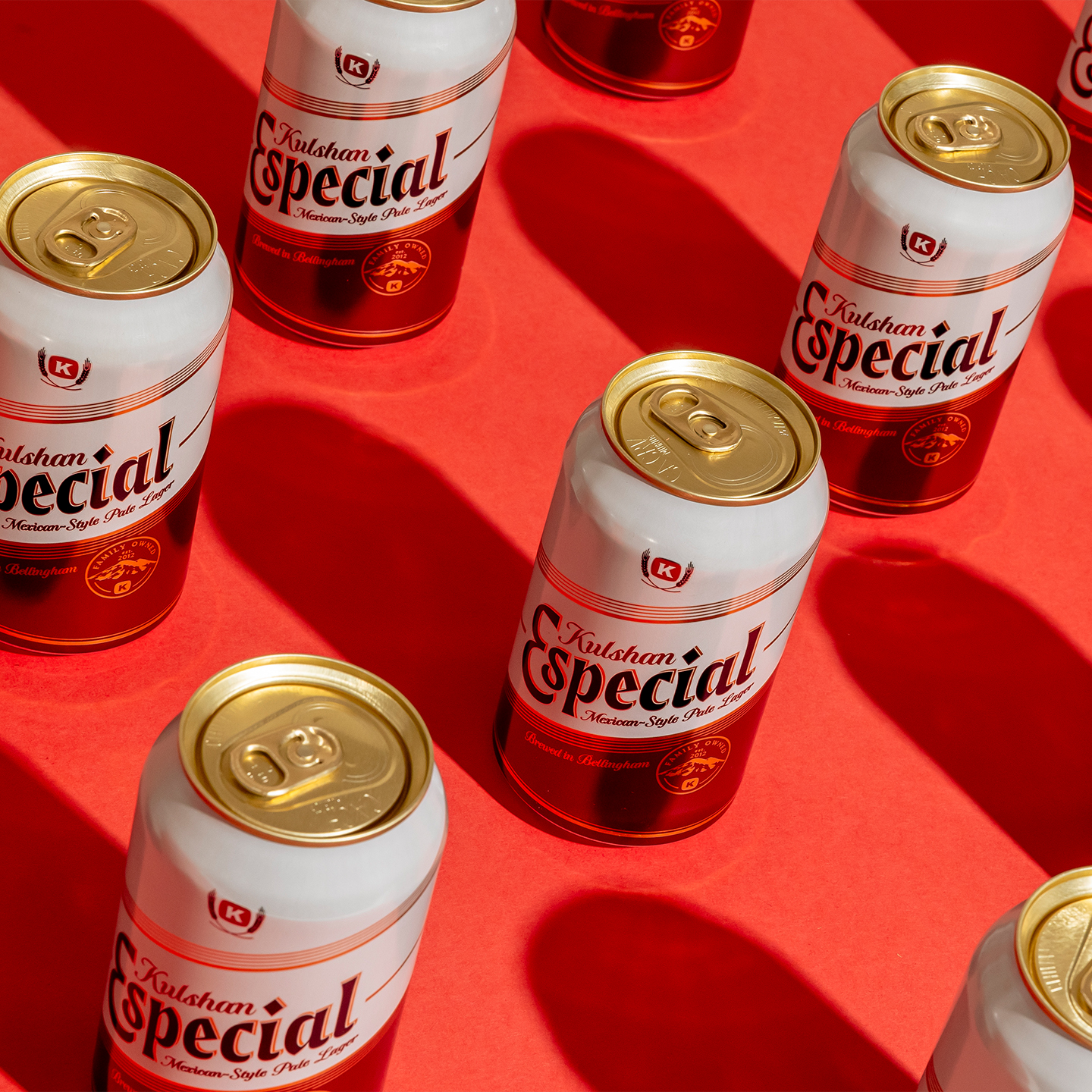
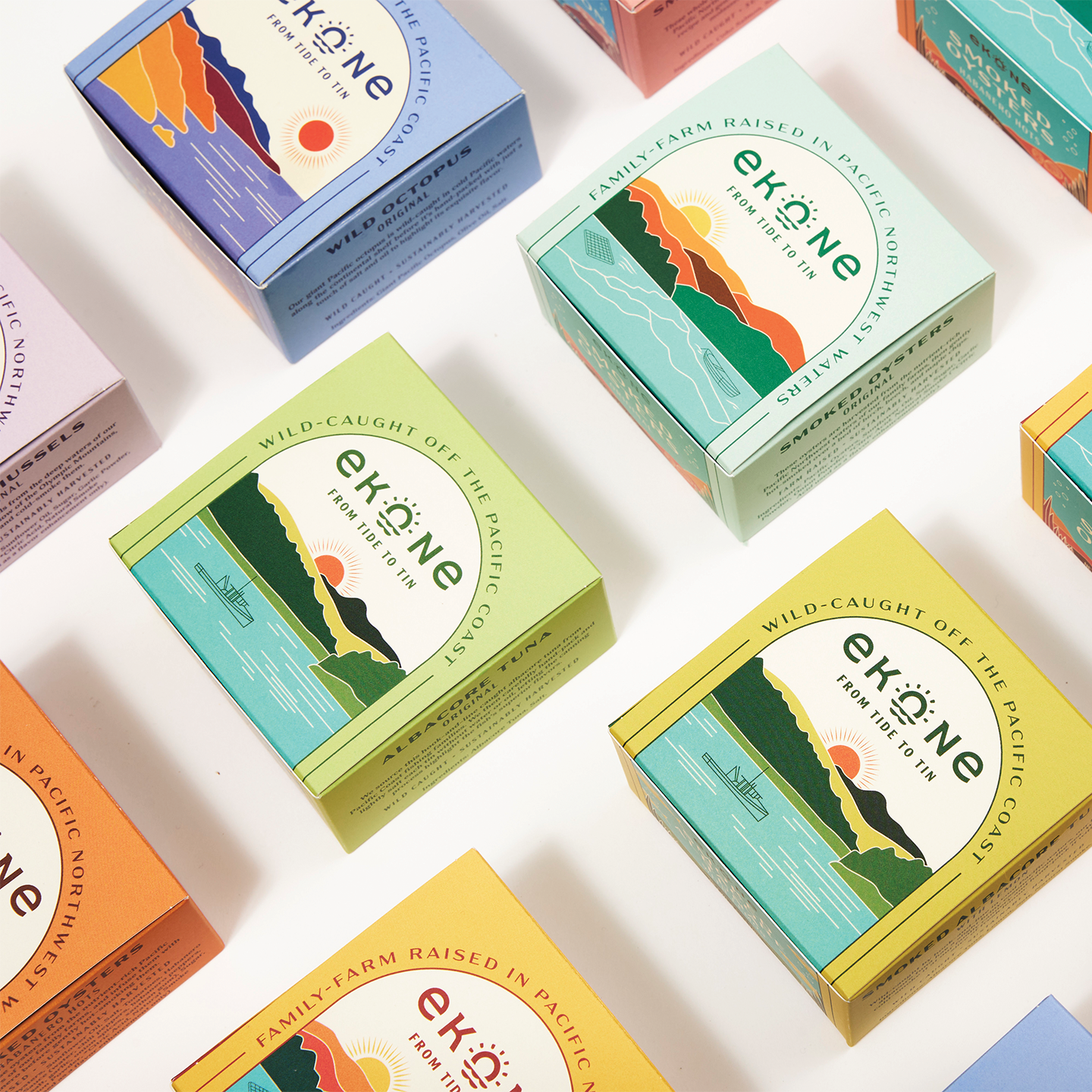
Do you have any professional projects from Snack Plate Creative or the last or the years before that that you feel especially proud of to see out in the world? I could name a couple. Working at Kulshan before starting Snack Plate is something I feel very proud of. I rebranded that brewery and I really helped formulate its current chapter. And I think that what it’s achieved over the last few years is really awesome. And I like to know that I was a part of that. And the other one I did while with Snack Plate is packaging the boxes for the tinned seafood. It’s a company that’s owned by the Taylor Shellfish family. Lauren and I are huge seafood foodies, and winning that job was a really exciting moment for us. And we love the Taylor Shellfish family, and being a part of them is something we find a lot of joy and pride in. And I really love the way those boxes turned out.
How often are you pitching to clients to try to get work? Well, it’s been slow this year. We’ve had only like 3 or 4 refs come through. We’re currently pitching two very large clients right now, which is exciting. I would say like, before this year, we were probably. 3 to 5 a quarter, so not a lot. We don’t do any marketing. We don’t do any business development. It’s on my list of things to do, but I haven’t done it. Everything so far has happened organically, and it’s happened in a way that’s very manageable for the two of us to do. But it is a little scary when you get these quiet lulls. Most of our clients, though, are kind of in retainer mode. So even though we’re not getting new work, we’re they’re they’re keeping us busy.
Did you find that presenting your work and pitching was something you got good at during school, or was it after the fact? I was terrified of speaking in front of the class for a long time, in a formal way. I feel like I could actually come to your class now and shoot from the hip. But as far as giving a presentation goes, it’s hard. I think it was my time at Blind Tiger as an art director where I had to be out in front of the client a lot more rather than hiding behind my computer screen that I really did learn how to present. I think that is a skill that you should have, being able to sell your work and connect the dots as to why this is a good solution for the problem. And bring in your own pitch for all of that is like, you need to be able to do that. Whether you’re pitching to your art director or to a client, it’s really important to be able to sell your idea. Because the concept is only so good as the way that you present it. Unless you’re just that good at design, which I’m not. My strength is not my graphic design. I really don’t think that it is. I feel like I didn’t come into my career until I started working more at the art director level, and I started being like, okay, there’s other people that are way more technically advanced than I am, but I can see the big picture and I can understand the assignment, and I can read this client and really understand what it is that they’re actually asking for and understand the markets, and then lead a team. So that was something that I didn’t know until I was in the workplace and had many years of experience under my belt.
I noticed with a lot of your designs - specifically Scrappy’s Bitters and the Kulshan Brewery - it looks like there’s a deep historical element to the designs that you’re creating. So I was wondering what’s the research research process like for that? And where do you draw inspiration from? Well, Scrappy’s was my first client, and I started that while I was at Seattle Central. I’ve kept them this whole time, which is bonkers. He really wanted an Art Nouveau sort of approach. When Skrappy’s came to be there wasn’t a craft bitters thing happening. He was one of the first to compete with the old timers. So the goal was to make it look old and to make it look like it had been around for a long time. So we just drew from the Art Nouveau period. And that was easy for me to do because I was in design school. So we had just done Design History. And then with Kulshan, that one actually came together really cool because when I did that rebrand, there was a designer there that I was working with and he helped with the redoing the logo. The head brewer’s little sister just started bartending there, and she had just graduated and she had studied linocut printmaking. And so I had really been wanting to do lino print cans. And so I worked with her to come up with the different illustrations of the mountain scapes in this area. So all those mountains are from this zone. That’s how we made those core cans. That’s actually one of my favorite things to do is to work with artists, to make a great design, basically.
Alumni Profile
I’m Martin, and I’m a type designer. Right now, I’m getting a master’s degree at a small art school in France doing type design. I’m really enjoying the school I’m at. I like my work, I like my teachers, I like my colleagues, I like living in France. So I decided to stay for another year. But I’ll be back in the U.S next year.
Alumni Profile
I wrote a lot of comic books. I was very involved with the Seattle comic scene. And I think that also was something, and I know a lot of cartoonists that went through the program and that really parlayed well with learning even UX like storyboarding and that type of thing, but also it's really useful to be able to visually display something. And so using those skills, using something I knew how to do.
Alumni Profile
Megan is a 2007 Creative Academy graduate who runs her own graphic design business with her sister in Bellingham, Washington